

Levi’s Smart World Cup Marketing Move: When Being Covered Up Made the Brand Even More Visible
The 2026 FIFA World Cup brought billions of eyes to stadiums across North America. For most brands, appearing on such a global stage would require paying enormous sponsorship fees. But Levi’s managed to become one of the tournament’s most talked-about brands without being an official FIFA sponsor.
Ironically, it all started with FIFA trying to hide them.
FIFA’s “Clean Stadium” Policy
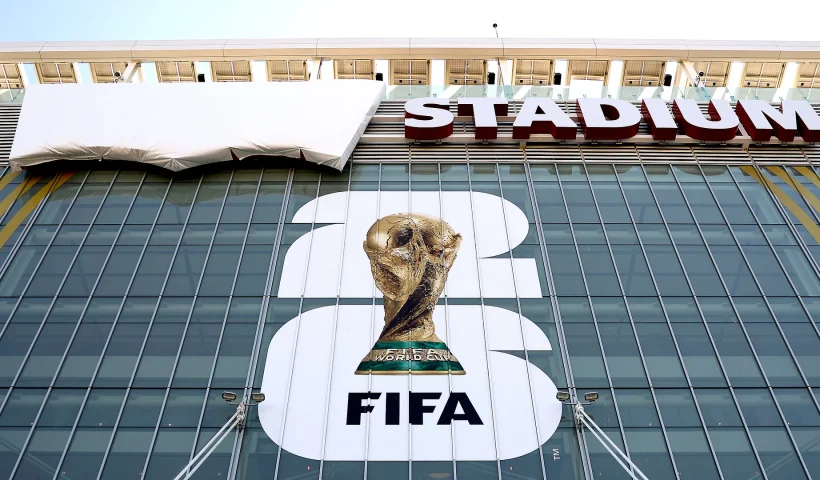
FIFA enforces strict “clean venue” regulations during the World Cup, meaning stadiums cannot display branding from companies that are not official tournament sponsors. As a result, Levi’s Stadium in Santa Clara, California was temporarily renamed the “San Francisco Bay Area Stadium,” and the iconic Levi’s signage was covered up with large white sheets.
What could have been an unfortunate branding setback quickly became a marketing opportunity.
Turning Restrictions into Viral Marketing
Instead of complaining or staying silent, Levi’s embraced the situation.
The brand changed its social media profile images to match the covered-up stadium logo and began posting playful content referencing the censorship. One of its posts humorously welcomed fans to the “beautiful [redacted] stadium,” instantly generating conversation online.
The move spread rapidly across social media platforms, with fans, marketers, and media outlets praising the creativity behind the campaign.
The message was simple:
If people can recognize your brand even when your name is hidden, your branding is incredibly powerful.
The Power of Distinctive Brand Assets
Levi’s iconic Batwing logo proved to be one of the company’s strongest assets. Even partially covered, millions of people instantly knew it was Levi’s.
This demonstrated an important marketing principle: strong brands do not always need to display their name to be recognized.
Brands spend years trying to build this level of mental availability and visual recognition. Levi’s accidentally received a global case study proving that it had already achieved it.
The Streisand Effect in Action
The campaign also highlighted what marketers call the Streisand Effect — when attempts to hide or suppress something end up drawing even more attention to it.
Had the Levi’s logo simply remained visible, most viewers would probably have ignored it as ordinary stadium signage. Instead, the act of covering it created curiosity, screenshots, memes, discussions, and extensive media coverage worldwide.
In many ways, FIFA unintentionally gave Levi’s free advertising.
Beyond the Stadium
Levi’s did not stop at social media.
The company extended the campaign by adapting the censored branding concept across stores in cities such as Paris, London, and Hong Kong, turning a local World Cup regulation into a global marketing activation. Videos related to the campaign generated millions of views and reportedly became one of the brand’s biggest social media successes ever.
This transformed a temporary inconvenience into a worldwide brand conversation.
Key Marketing Lessons from Levi’s
Levi’s World Cup campaign offers several valuable lessons for marketers:
1. Constraints Can Create Creativity
Some of the best marketing ideas emerge from limitations rather than unlimited freedom.
2. Build Distinctive Brand Assets
A recognizable logo, shape, color, or visual identity can be more valuable than paid advertising.
3. React Quickly to Cultural Moments
Levi’s capitalized on the conversation immediately, allowing the campaign to gain momentum organically.
4. Earned Media Can Outperform Paid Media
Without paying FIFA sponsorship fees, Levi’s generated significant global attention and became one of the tournament’s most discussed brands.
Masterclass in Modern Marketing
Levi’s turned what appeared to be a branding loss into a masterclass in modern marketing.
By embracing FIFA’s restrictions rather than fighting them, the company demonstrated the strength of its brand identity, leveraged the power of social media, and generated massive earned media value.
Sometimes, the smartest marketing move is not trying to be seen more.
Sometimes, it is proving that people can recognize you even when you are hidden.
Read more on our website at: https://sumwgroup.com/our-blogs/